
Offsite SEO is an important part of digital marketing because it helps improve a website’s authority and trust outside of the actual website itself. While onsite SEO focuses on optimizing pages within your site, offsite SEO focuses on building credibility through outside sources like backlinks, local citations, guest posting, and social mentions.
Search engines like Google use offsite SEO signals to determine how trustworthy and valuable a website is. When other high-quality websites link back to your content, search engines see that as a sign that your website provides useful information. This can improve rankings, increase traffic, and strengthen your online reputation.
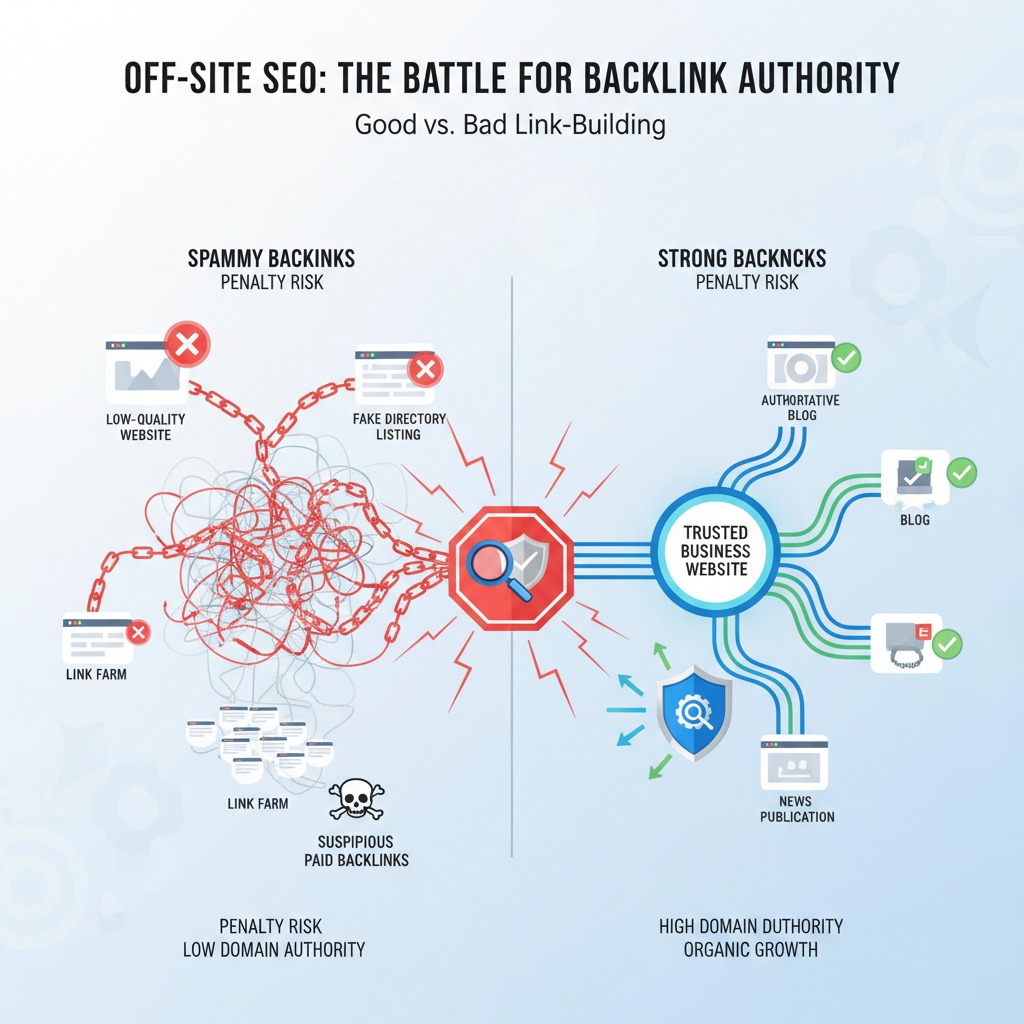
One of the biggest goals of offsite SEO is building strong backlinks. However, not all backlinks are equal. Quality matters much more than quantity. A few links from trusted websites are far more valuable than many low-quality or spammy links. Understanding how to build authority the right way is the key to long-term SEO success.
Building Quality Backlinks
Backlinks are links from other websites that point to your website. They act like recommendations, showing search engines that your content is valuable enough for others to reference.
For example, if a trusted marketing blog links to your article about SEO strategies, that backlink helps improve your credibility. Search engines view this as a positive ranking signal.
The best backlinks come from websites that are relevant to your industry and have strong authority themselves. A backlink from a respected news site or educational blog is much stronger than one from a random low-quality website.
Businesses should focus on creating content that naturally earns backlinks, such as helpful blog posts, original guides, case studies, and useful resources people want to share.
Guest Posting for Authority
Guest posting is another strong offsite SEO strategy. This means writing content for another website in exchange for exposure and often a backlink to your own site.
For example, a fitness trainer could write a guest post for a health blog about workout tips and include a link back to their personal training website. This helps reach a new audience while also building authority.
Guest posting works best when the website is relevant and trustworthy. Writing for random websites only for backlinks can actually hurt SEO if those sites have poor reputations.
The goal should always be providing valuable content first and backlinks second. Quality guest posts build both SEO strength and brand trust.
Local Citations and Business Listings
For local businesses, citations are another important part of offsite SEO. A citation is any online mention of your business name, address, and phone number, often called NAP information.
Listings on platforms like Google Business Profile, Yelp, and local directories help search engines verify that your business is real and trustworthy. Consistent information across all listings improves local SEO rankings.
For example, if a bakery has the same business details listed across Google, Yelp, and Facebook, it increases the chances of appearing in local search results when people search for nearby services.
Incorrect or inconsistent listings can confuse search engines and hurt rankings, so keeping this information updated is very important.
Social Mentions and Brand Visibility
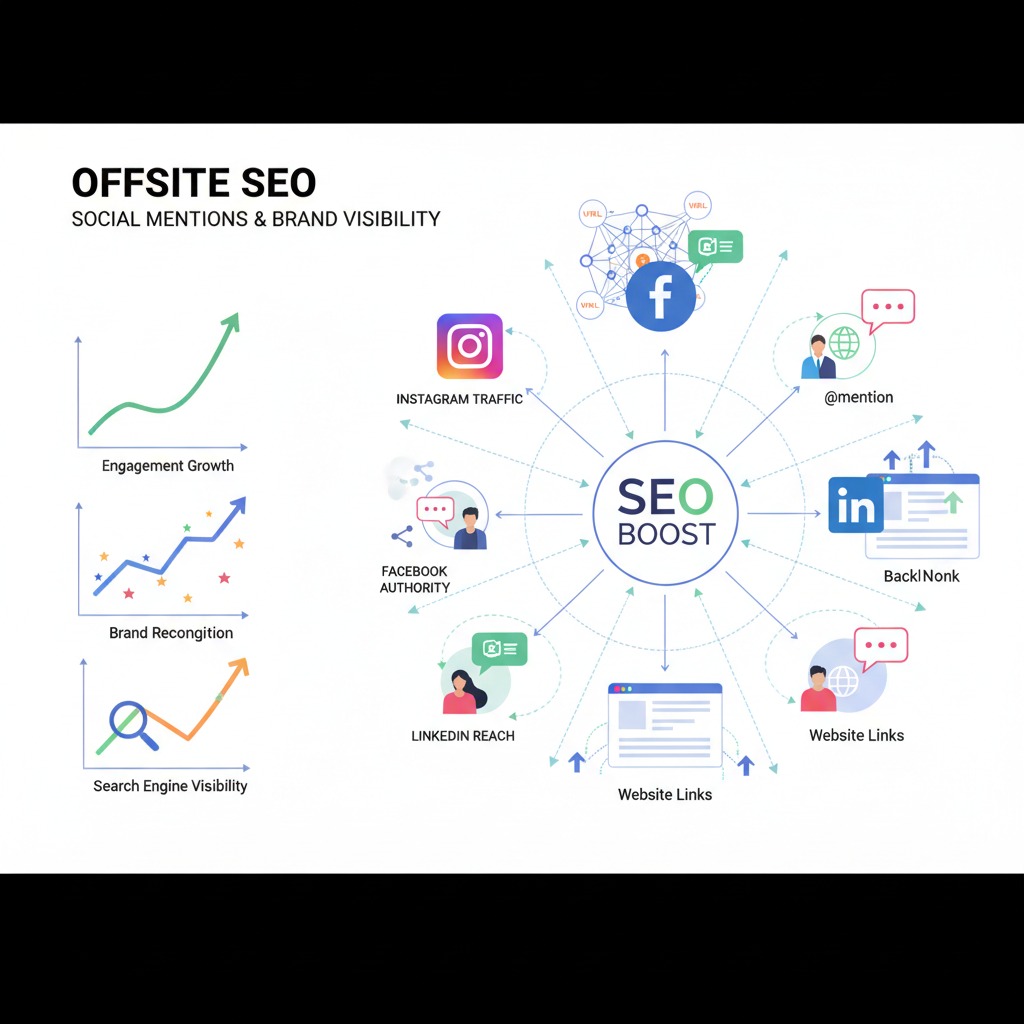
Social mentions also support offsite SEO, even if they are not direct ranking factors. When people share your content on social media platforms, it increases visibility and creates more opportunities for traffic and backlinks.
For example, if a blog post gets shared widely on platforms like Instagram, Facebook, or LinkedIn, more people may discover it and reference it on their own websites. This can lead to natural backlink growth.
Strong social engagement also builds brand awareness and trust. Businesses that stay active online often gain stronger recognition, which supports both SEO and customer growth.
Social mentions should be part of a larger strategy focused on valuable content and audience engagement.
Avoiding Spammy Link Building
One of the biggest mistakes in offsite SEO is using spammy link-building practices. Some businesses try to buy backlinks or use low-quality link farms to rank faster. While this may seem helpful at first, search engines often penalize these tactics.
Google prioritizes natural and trustworthy link-building. Paid links, excessive directory submissions, and irrelevant backlinks can damage rankings instead of improving them.
Good SEO takes time. Building authority through genuine relationships, quality content, and trusted mentions creates stronger and safer long-term results.
It is always better to earn backlinks naturally than to force them through risky shortcuts.
Examples
A local restaurant trying to improve online visibility could partner with local food bloggers and ask them to review their menu. If those bloggers publish articles and link back to the restaurant’s website, the restaurant gains valuable backlinks and stronger local authority.
At the same time, making sure the business is listed correctly on Google Business Profile, Yelp, and TripAdvisor helps improve local search rankings. Combined with social media shares from customers, these strategies create stronger offsite SEO results.
Conclusion
Offsite SEO is essential for building trust, authority, and stronger rankings in search engines. Backlinks, guest posting, local citations, and social mentions all help improve how search engines view your website.
The most important lesson in offsite SEO is that quality matters more than quantity. Strong backlinks from trusted sources are far more valuable than large numbers of weak or spammy links.
In my opinion, offsite SEO is one of the best ways to create long-term digital growth because it builds both rankings and reputation at the same time. A website with strong authority stands out more, ranks better, and earns more trust from users.
References
Google Search Central. (2026). Link Building and SEO Best Practices. Retrieved from https://developers.google.com/search
Google. (2026). Google Business Profile. Retrieved from https://www.google.com/business/
Moz. (2026). Beginner’s Guide to Link Building. Retrieved from https://moz.com/
HubSpot. (2026). Off-Page SEO Strategies. Retrieved from https://blog.hubspot.com/
Yelp Business. (2026). Local Citations and Business Listings. Retrieved from https://business.yelp.com/
Leave a Reply