

Introduction
Onsite SEO is one of the most important parts of building a successful website because it focuses on everything that happens directly on your website to help improve search engine rankings. While offsite SEO helps build authority from outside sources, onsite SEO makes sure your website is properly structured, easy to understand, and valuable for both users and search engines.
Good onsite SEO helps search engines like Google understand what your pages are about and why they should rank higher in search results. It also improves user experience by making content easier to read, faster to load, and more mobile-friendly. Without strong onsite SEO, even great content can struggle to perform well.
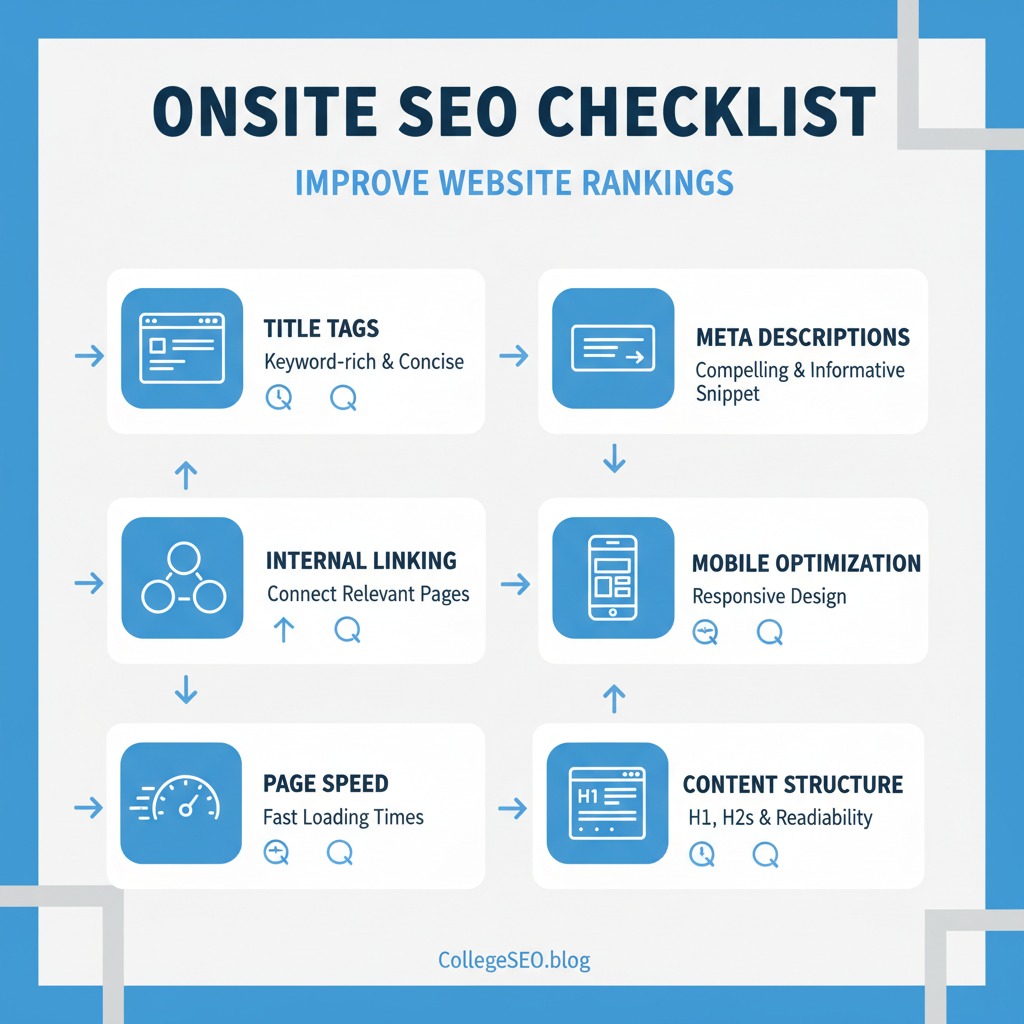
There are several important strategies that help improve rankings, including title tags, meta descriptions, internal linking, mobile optimization, page speed, and content structure. When these areas work together, websites can increase traffic, reduce bounce rates, and improve overall performance.
Optimizing Title Tags and Meta Descriptions
Title tags and meta descriptions are often the first things users see in search results, so they play a major role in both rankings and click-through rates. A title tag tells search engines what the page is about, while the meta description gives users a short summary of the content.
A strong title tag should include the main target keyword and remain clear and specific. For example, instead of using a title like “Marketing Tips,” a better title would be “Best Onsite SEO Strategies for Small Business Websites.” This makes the topic more relevant and easier to rank.
Meta descriptions do not directly impact rankings as much as title tags, but they strongly influence whether users click on your page. A well-written meta description should be short, engaging, and encourage action.
Improving Internal Linking
Internal linking is another powerful onsite SEO strategy. This means linking one page of your website to another related page within the same site. Internal links help users navigate your content and help search engines understand the relationship between pages.
For example, if you write a blog post about keyword research, you can link it to another post about content marketing or Google Ads strategies. This keeps visitors on your site longer and improves page authority across multiple pages.
Strong internal linking also helps search engines crawl your website more efficiently. Pages that are connected clearly are easier to index and rank.
Mobile Optimization
Mobile optimization has become essential because most users now search from their phones instead of desktop computers. If a website is difficult to use on mobile devices, visitors often leave quickly, which increases bounce rates and hurts rankings.
A mobile-friendly website should load properly on all screen sizes, have readable text, simple navigation, and fast-loading images. Buttons should be easy to click, and users should not need to zoom in just to read content.
Google uses mobile-first indexing, which means it primarily evaluates the mobile version of a website when deciding rankings. This makes mobile optimization one of the most important onsite SEO factors today.

Page Speed and Website Performance
Page speed directly affects both SEO and user experience. If a page takes too long to load, users are more likely to leave before interacting with the content. Slow websites lose traffic, conversions, and search visibility.
Improving page speed can include compressing images, reducing unnecessary plugins, using caching, and choosing reliable hosting. Tools like Google help website owners identify problems and improve performance.
Even a few extra seconds of loading time can make a major difference, especially for mobile users. Faster websites create stronger engagement and better ranking opportunities.
Creating Strong Content Structure
Content structure is another key part of onsite SEO. Search engines reward content that is clear, organized, and helpful. Using proper headings like H1, H2, and H3 tags helps both users and search engines understand the main topics of the page.
Paragraphs should be easy to read, not too long, and focused on one main idea at a time. Including images, bullet points, and FAQs can also improve readability and user engagement.
Keyword placement matters too, but it should always feel natural. Keyword stuffing can hurt rankings instead of helping. The goal is to create content that answers real questions while still being optimized for search.
Examples
A local fitness trainer trying to improve website rankings may create a page titled “Personal Training Services in Hoboken.” By using strong title tags, internal links to service pages, mobile-friendly design, and fast-loading images, that page has a better chance of ranking higher for local searches.
If the trainer also adds clear headings, client testimonials, and FAQ sections, users stay longer on the page and trust the business more. These small onsite SEO improvements can lead to stronger rankings and more customer inquiries.
Conclusion
Onsite SEO is the foundation of strong website performance because it controls how search engines and users experience your content. Without proper optimization, even the best websites can struggle to rank well.
Title tags, meta descriptions, internal linking, mobile optimization, page speed, and content structure all work together to improve visibility and user engagement. These strategies may seem small individually, but together they create a major impact.
In my opinion, onsite SEO is one of the best long-term investments for any business website because it improves both rankings and customer experience at the same time. A well-optimized website does not just attract traffic—it keeps visitors engaged and turns them into customers.
References
Google Search Central. (2026). SEO Starter Guide. Retrieved from https://developers.google.com/search
Google. (2026). PageSpeed Insights. Retrieved from https://pagespeed.web.dev/
HubSpot. (2026). On-Page SEO Guide. Retrieved from https://blog.hubspot.com/
Moz. (2026). On-Page Ranking Factors. Retrieved from https://moz.com/learn/seo/on-page-factors
Leave a Reply